

Steps for Creating a Successful SUS Test
To conduct a SUS test, the Nielsen Group recommends the following steps:
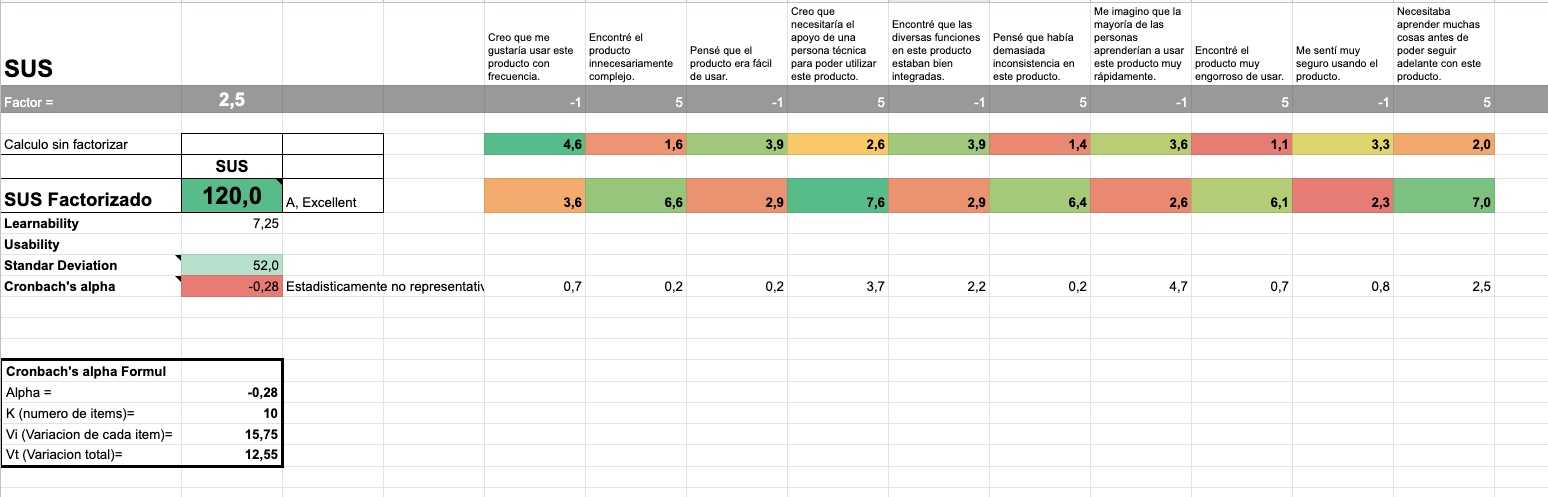
- Prepare the questionnaire: The SUS questionnaire consists of 10 statements related to the usability of the system. Participants rate each statement on a 5-point Likert scale, ranging from “Strongly Disagree” to “Strongly Agree.”
- Administer the questionnaire: Participants rate their agreement with each statement based on their experience using the system.
- Calculate the scores: For odd-numbered items, subtract 1 from the participant’s score. For even-numbered items, subtract the participant’s score from 5. Sum up the adjusted scores for all 10 items, resulting in a score between 0 and 40.
- Interpret the results: The SUS score is used to compare different systems or track usability improvements over time. Higher scores indicate better usability, with a score above 68 generally considered above average.
It’s important to note that SUS is just one of many methods used to evaluate the usability of a system. It should be complemented with other UX research techniques for a comprehensive understanding of the user experience.
Questions in a SUS Test
The following are the questions asked in a SUS test:
- I think that I would like to use this system frequently.
- I found the system unnecessarily complex.
- I thought the system was easy to use.
- I think that I would need the support of a technical person to be able to use this system.
- I found the various functions in this system were well integrated.
- I thought there was too much inconsistency in this system.
- I would imagine that most people would learn to use this system very quickly.
- I found the system very cumbersome to use.
- I felt very confident using the system.
- I needed to learn a lot of things before I could get going with this system.
Results and Interpretation
The SUS scores are interpreted as follows:
- 80.3 or above: A (Excellent)
- 68 to 80.3: B (Good)
- 68: C (Okay)
- 51 to 68: D (Poor)
- Below 51: F (Awful)

Cronbach’s Alpha Formula
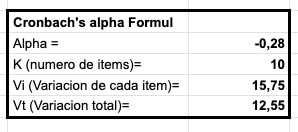
The formula to calculate Cronbach’s alpha reliability coefficient for SUS is as follows:
- Calculate the correlation between each pair of questionnaire items.
- Sum all the obtained correlations.
- Divide the sum of correlations by the total number of questionnaire items.
- Subtract the result obtained from 1.
- Divide the result obtained by the number of questionnaire items minus 1.
The resulting value of Cronbach’s alpha provides a measure of the internal consistency of the questionnaire. Higher values indicate greater reliability and consistency in participants’ responses.
It is important to note that Cronbach’s alpha is a statistical technique used to evaluate the reliability of items in a questionnaire. It measures the internal consistency of the items, rather than the validity of the questionnaire itself.